


Strona główna / Knowledge Base /
Arthroscopic treatment of knee, ankle, and shoulder joints
Arthroscopic treatment of knee, ankle, and shoulder joints – modern orthopedics with ligament reconstruction
The knee, ankle, and shoulder joints are among the areas of the musculoskeletal system particularly prone to injuries, overloads, and chronic pain. They are responsible for many daily activities: walking, running, changing direction, raising the arm, and maintaining body stability. When damage occurs inside the joint or ligaments are compromised, the patient experiences pain, instability, and limited function, which can significantly impair life. Wilmed’s communication clearly shows that orthopedics is presented not only as injury treatment but as modern, precise restoration of joint function.
One of the most important tools in contemporary orthopedics is arthroscopy. Wilmed describes ankle arthroscopy as a minimally invasive orthopedic surgical procedure that allows precise assessment and treatment of intra-articular problems. In a similar vein, the clinic presents arthroscopic treatment of the knee and shoulder joints and ligament reconstructions, showing these procedures as part of a modern surgical offer.

What is arthroscopic joint treatment?
Arthroscopy is a surgical technique that allows viewing inside the joint and simultaneously performing treatment with limited tissue invasion. On the Wilmed website, this minimally invasive nature and precision are among the most important features of these procedures. The clinic uses arthroscopy to treat knee joints, ankle joints, and shoulders, demonstrating the broad application of this method in trauma and overload orthopedics.
From the patient’s perspective, this means the ability to precisely assess joint structures and simultaneously remove or repair the source of the problem. This treatment method is especially valuable where precision and minimal disruption of surrounding tissues are important. This is why arthroscopy is such a vital part of modern orthopedics today, as clearly reflected in Wilmed’s offerings.

Arthroscopic treatment of knee joints
The knee is one of the most frequently overloaded and injured joints in the body. Wilmed offers both arthroscopic treatment of knee joint injuries and separately arthroscopic reconstruction of knee ligaments. This distinction alone shows that the clinic approaches knee treatment broadly: from procedures addressing intra-articular damage to more advanced restoration of joint stability.
In practice, arthroscopic knee treatment can address various post-injury and overload problems, while ligament reconstruction is particularly important when joint stability is lost. Wilmed presents this procedure as a separate orthopedic intervention, indicating its significant role in treating patients after knee ligament injuries.
Knee ligament reconstruction
On the Wilmed website, knee ligament reconstruction is described in more detail. The clinic states that the procedure is performed in an operating room under regional or general anesthesia. During surgery, the surgeon removes the damaged ligament and replaces it with a new one, which may be made from the patient’s own tissues or an allograft from a tissue bank.
This is an important communication point because it shows that reconstruction is not simply „repairing” the ligament but restoring it in a way that reestablishes joint stability. For the patient, this means a real chance to improve knee function, greater movement safety, and the possibility of returning to activity after properly managed rehabilitation. This presentation aligns with Wilmed’s medical and precise style.
Ankle joint arthroscopy
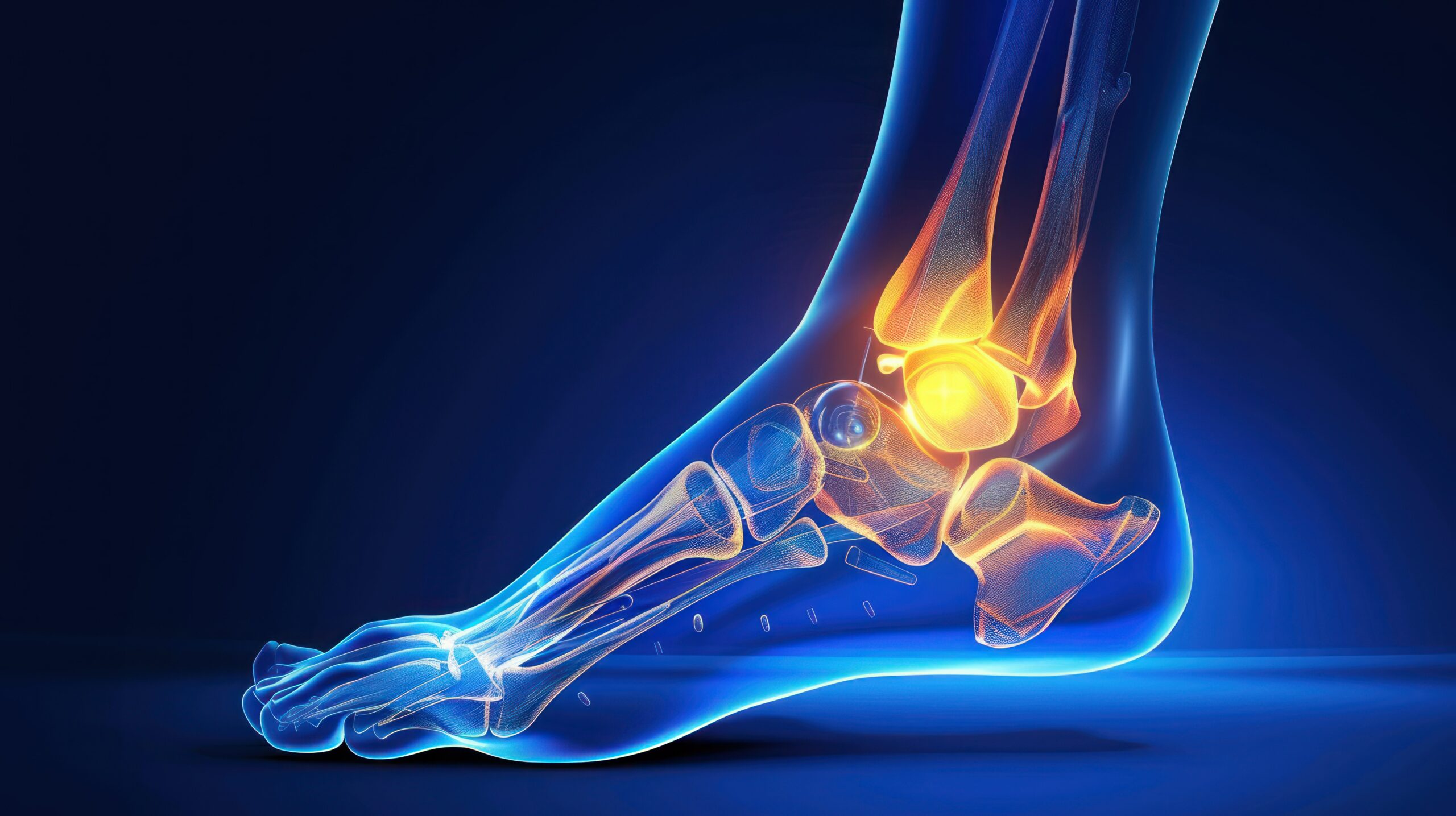
The ankle joint plays a key role in movement, balance maintenance, and load transfer. When injury or chronic instability occurs, the patient may experience not only pain but also uncertainty when walking, running, or descending stairs. Wilmed describes ankle arthroscopy as a minimally invasive orthopedic surgical procedure that enables precise assessment and treatment of intra-articular problems.
This is very important because the ankle joint is often underestimated by patients after sprains and injuries, while chronic problems in this area can lead to long-lasting discomfort. The presence of ankle arthroscopy in Wilmed’s offerings shows that the clinic also provides more complex orthopedic treatment of this area, not just standard conservative management.
ATFL ligament reconstruction of the ankle joint
Wilmed also separately communicates ATFL ligament reconstruction of the ankle joint. The clinic explains that the procedure involves anatomical restoration of the ATFL ligament to restore proper ankle joint stability. Depending on indications, reconstruction may be performed using the patient’s own tissues or modern implants and reinforcing materials.
This is very important because in cases of chronic ankle instability, symptomatic treatment alone is not always sufficient. If the main problem is ligament damage, restoring proper stability can be crucial for regaining function. This description clearly shows that Wilmed approaches the ankle joint not only from the perspective of pain but primarily in terms of function and biomechanics.

Shoulder Joint Arthroscopy
The shoulder is an exceptionally complex joint, making it particularly susceptible to injuries, overload, and instability. Wilmed describes shoulder arthroscopy as a method used, among others, in the treatment of rotator cuff injuries, shoulder instability, labral tears, subacromial impingement, and chronic inflammatory conditions. This is a very broad range of indications, highlighting the significant role arthroscopy plays in treating shoulder problems.
For the patient, this means the possibility of treating ailments that manifest as pain when lifting the arm, shoulder weakness, a sensation of catching, or recurrent instability. Wilmed also notes in the FAQ that the procedure is performed under anesthesia, making it painless during the operation, and post-operative discomfort is usually well managed with medication.
Dlaczego artroskopia i rekonstrukcje więzadeł mają dziś tak duże znaczenie?
Współczesna ortopedia coraz mocniej stawia na leczenie celowane, precyzyjne i możliwie oszczędzające tkanki. W ofercie Wilmed bardzo dobrze to widać: zamiast jednego ogólnego hasła o leczeniu urazów stawów klinika pokazuje konkretne procedury dotyczące kolana, skokowego i barku, a przy niestabilności dodatkowo akcentuje rekonstrukcje więzadeł.
To podejście ma znaczenie praktyczne. Pacjent nie szuka przecież wyłącznie „zabiegu ortopedycznego”, ale rozwiązania dopasowanego do konkretnego problemu: uszkodzonego więzadła w kolanie, niestabilnego skokowego albo bolesnego barku. Wilmed pokazuje właśnie taką ortopedię — opartą na rozpoznaniu źródła problemu i doborze odpowiedniej procedury.

Minimally invasive and precise treatment
Wilmed’s communication strongly emphasizes the minimally invasive nature of arthroscopy. The clinic uses this term explicitly for ankle arthroscopy, and the nature of shoulder and knee arthroscopy in the offer also fits this modern treatment model. Minimally invasive procedures are important to patients because they are associated with precision, less surgical trauma, and better tailoring of treatment to the intra-articular problem.
At the same time, Wilmed does not oversimplify these procedures. Knee and ankle ligament reconstructions are presented as full-fledged orthopedic surgeries requiring appropriate qualification and technique. This is important because it shows that minimally invasive does not mean trivial but rather a modern way of performing treatment.
Who might benefit from such treatment?
Based on Wilmed’s offer, arthroscopic joint treatment and ligament reconstructions are solutions for patients with injuries, instability, and intra-articular problems of the knee, ankle, and shoulder joints. This especially applies to those whose pain, limited movement, or joint instability interfere with daily functioning or returning to activity.
Not every joint problem requires surgery, of course, but the broad arthroscopic offer at Wilmed shows that the clinic also handles more advanced orthopedic treatment when conservative methods prove insufficient. This conclusion comes from the range of services and descriptions of individual procedures on the clinic’s website.
Arthroscopic treatment of knee, ankle, and shoulder joints is an important element of modern orthopedics. Wilmed clearly communicates in this area arthroscopic treatment of knee joint injuries, knee ligament reconstruction, ankle joint arthroscopy, ATFL ankle ligament reconstruction, and shoulder joint arthroscopy. The clinic emphasizes the minimally invasive nature of arthroscopy, precision of action, and the importance of restoring proper joint stability.
The most important aspect of this topic is that Wilmed does not present orthopedics as a single general service but as a set of specific solutions tailored to different joints and various problems: pain, injury, instability, or ligament damage. This style of description best fits your website’s tone and will work well in a blog post.

FAQ – arthroscopic joint treatment
What is arthroscopic joint treatment?
Arthroscopy is a minimally invasive orthopedic surgical procedure that allows precise assessment and treatment of problems inside the joint with minimal damage to surrounding tissues. Wilmed uses this method to treat the knee, ankle, and shoulder joints.
What arthroscopic procedures does Wilmed perform?
Wilmed performs arthroscopic treatment of knee joint injuries, arthroscopic reconstruction of knee ligaments, ankle joint arthroscopy, ATFL ligament reconstruction of the ankle joint, and shoulder joint arthroscopy in orthopedics.
What does knee joint arthroscopy involve?
Wilmed explains that during knee arthroscopy, a camera and micro-surgical instruments are introduced into the joint through small incisions. The procedure is performed in an operating room under regional or general anesthesia, and the surgeon observes the operation on a monitor.
When is knee ligament reconstruction necessary?
Wilmed indicates that the procedure is recommended for patients with complete or significant ligament damage causing chronic knee instability, recurrent sprains, or preventing sports participation.
How is knee ligament reconstruction performed?
According to Wilmed, the procedure is performed under regional or general anesthesia. The surgeon removes the damaged ligament and replaces it with a new one made from the patient’s own tissues or a frozen graft from a tissue bank.
What does ankle joint arthroscopy involve?
Wilmed describes ankle arthroscopy as a minimally invasive orthopedic procedure. The procedure is performed under anesthesia, and postoperative pain may occur temporarily but is controlled with medication.
What is ATFL ligament reconstruction of the ankle joint?
This procedure involves the anatomical restoration of the ATFL ligament to restore proper ankle joint stability. Wilmed states that reconstruction can be performed using the patient’s own tissues or modern implants and reinforcing materials.
Can ankle ligament reconstruction be performed minimally invasively?
Yes. Wilmed notes that ATFL reconstruction is increasingly performed using minimally invasive, often arthroscopic techniques, which help reduce surgical trauma, postoperative pain, and shorten recovery time.
What problems can be treated with shoulder arthroscopy?
According to Wilmed, shoulder arthroscopy is used to treat rotator cuff injuries, shoulder instability, labral tears, subacromial impingement, and chronic inflammatory conditions.
What does shoulder joint arthroscopy involve?
Wilmed explains that a microcamera and special surgical instruments are introduced into the shoulder, allowing even complex operations without opening the joint. The procedure usually lasts up to 2 hours and is performed under general or plexus anesthesia.
What is the recovery like after shoulder arthroscopy?
Wilmed states that after the procedure, the patient moves independently; the arm may be placed in a brace or rehabilitation may begin immediately. Full recovery takes from several weeks to several months depending on the extent of the procedure.
Does arthroscopy leave large scars?
No. Wilmed emphasizes that the incisions are very small, so scars after arthroscopy are minimal, barely visible, and become almost invisible over time.
Who at Wilmed performs these procedures?
Wilmed indicates that arthroscopic procedures of the knee, shoulder, and ankle joints, as well as ligament reconstructions of the knee joints, are performed, among others, by MD Janusz Kurek.
Contact
Contact us
Call us
Address
ul. Wiktorii Wiedeńskiej 9a lok.U2
02-954 Warszawa - Wilanów
Data Protection Officer
Katarzyna Mączyńska - MBRK
inspektor@mbrk.pl
Opening hours
Monday to Friday
from 08:00 to 20:00